
West Brom have had some seriously top players to grace The Hawthorns over the years.
Baggies managers have been blessed with some of England’s finest talent in their first-team squad. Whether that has been budding academy talents or veterans of the game – there has been a monumental amount of world-beaters who have contributed to trophies galore and ingrained their name in the club’s rich history.
Billy Bassett

| Position: | Winger |
| Appearances: | 261 |
| Goals: | 61 |
| Managers: | Louis Ford (1890 – 1892), Henry Jackson (1892 – 1894), Edward Stephenson (1894-1895), Clement Keys (1896 – 1899) |
| Years at West Brom: | 1886 – 1899 |
Billy Bassett was West Brom’s first-ever footballing superstar. He joined West Bromwich Albion in 1886. Bassett made his League debut on 8 September 1888, remarkably at just 19 years 225 days old. This made him West Bromwich Albion’s youngest-ever player at the time.
From that day on, he was a regular in the Baggies setup. He played 261 Football League games for Albion, scoring 61 goals.
His fine efforts for the club also meant he was capped 16 times for England caps. He scored eight goals for his country and began recognition as one of the earliest players to be nationally recognized.
After his playing days, Bassett became an Albion director in 1905, following the resignation of the previous board in its entirety.
The club was in deep financial trouble but Bassett and returning chairman Harry Keys rescued the club, aided by local fund-raising activities.
His fine efforts saw Bassett become chairman in 1908 where he helped the Baggies avoid bankruptcy again in 1910.
This was by paying players out of his pocket. Billy Bassett sadly died in West Bromwich on 8 April 1937 at the age of 68. He will forever be remembered as one of the most iconic names in the club’s history.
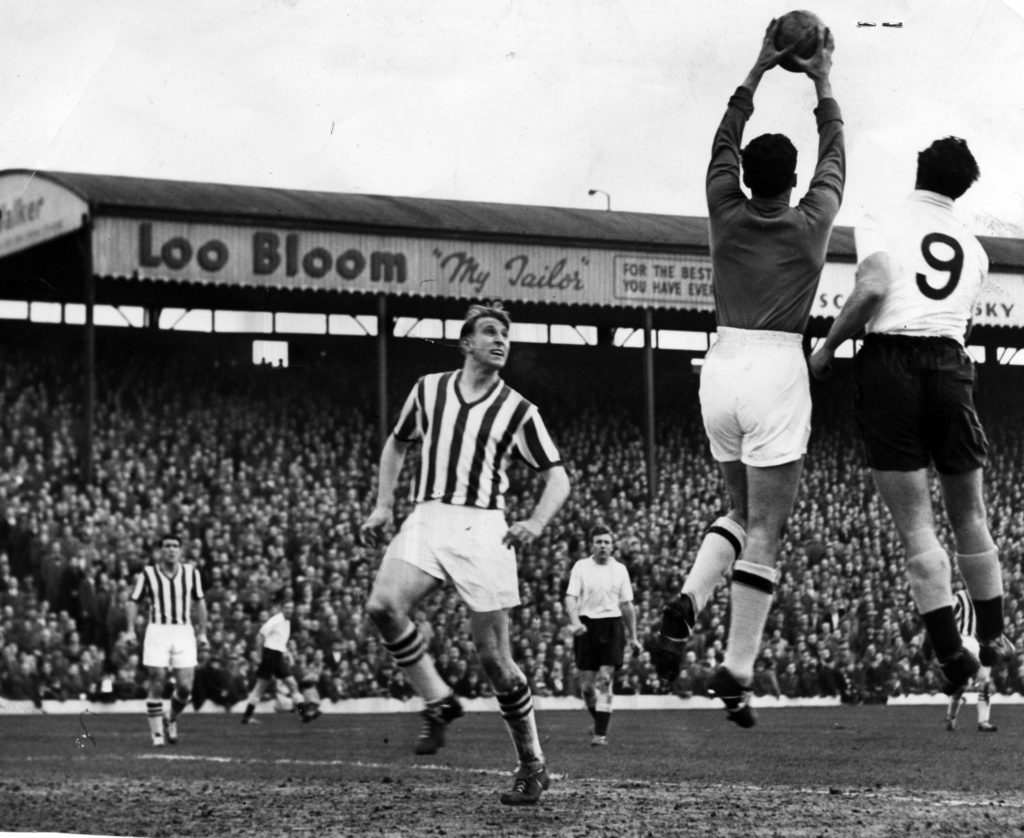
Ray Barlow
| Position: | Midfielder |
| Appearances: | 403 |
| Goals: | 31 |
| Managers: | Billy Smith (1944-1952) Jesse Carver (1952-1953), Vic Buckingham (1953-1955) Cyril Regis (1955-1959), Jimmy Hagan (1959-1960) |
| Years at West Brom: | 1944-1960 |
Ray Barlow played as a midfielder and made significant contributions during his time with West Bromwich Albion. He was born on May 17th 1927, in West Bromwich. He would begin his professional career with his hometown club in 1944.
He quickly established himself as a versatile and highly skilful midfielder, known for his passing ability, vision, and leadership on the pitch. Barlow played a crucial role in West Bromwich Albion’s success during the late 1940s and early 1950s.
One of the highlights of his 400-game career came at Wembley Stadium on May 1, 1954, where his Baggies side won the FA Cup.
The same season West Brom finished as runners-up in the First Division, being just pipped by Wolves. This side was dubbed ‘The Team of the Century’, with Barlow arguably the best player.
In addition to his club success, Barlow represented the English national team, earning caps in the post-World War II era. Barlow sadly passed away back in 2012 but will be regarded by a generation of Baggies fans as their club’s finest-ever player.
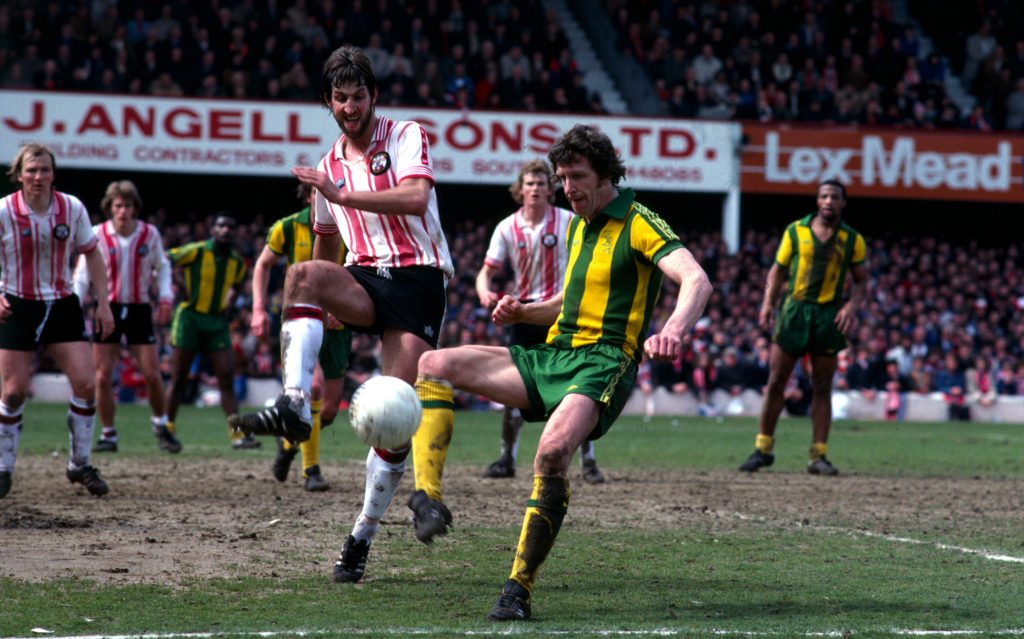
John Wile
| Position: | Centre-back |
| Appearances: | 500 |
| Goals: | 24 |
| Managers: | Alan Ashman (1970–1971), Don Howe (1971–1975), Johnny Giles (1975–1977), Ronnie Allen (1977–1978), Ron Atkinson (1978–1981) Ronnie Allen (1981–1982) Ron Wylie (1982–1983) |
| Years at West Brom: | 1970-1983 |
John Wile was Born on October 9, 1947, in Cannock, England. He went on to become a stalwart defender and a legendary figure for the club during the 1970s and early 80s.
Wile’s illustrious career with West Bromwich Albion spanned from 1970 to 1983, where he established himself as a key player and later captain over his 500 appearances.
His leadership qualities and defensive prowess played a crucial role in the team’s success. Wile was part of the West Brom side that achieved promotion to the First Division in the 1975-76 season.
One of the most memorable moments in Wile’s career occurred in the 1978-79 season when West Brom reached the quarter-finals of the UEFA Cup.
Awards and honours include Wile being named West Bromwich Albion Player of the Season in 1976. He also took over as caretaker manager of the Baggies from 1970-1983.
John Wile’s legacy at West Bromwich Albion endures, with his dedication, leadership, and defensive skills making him an iconic figure in the club’s history.
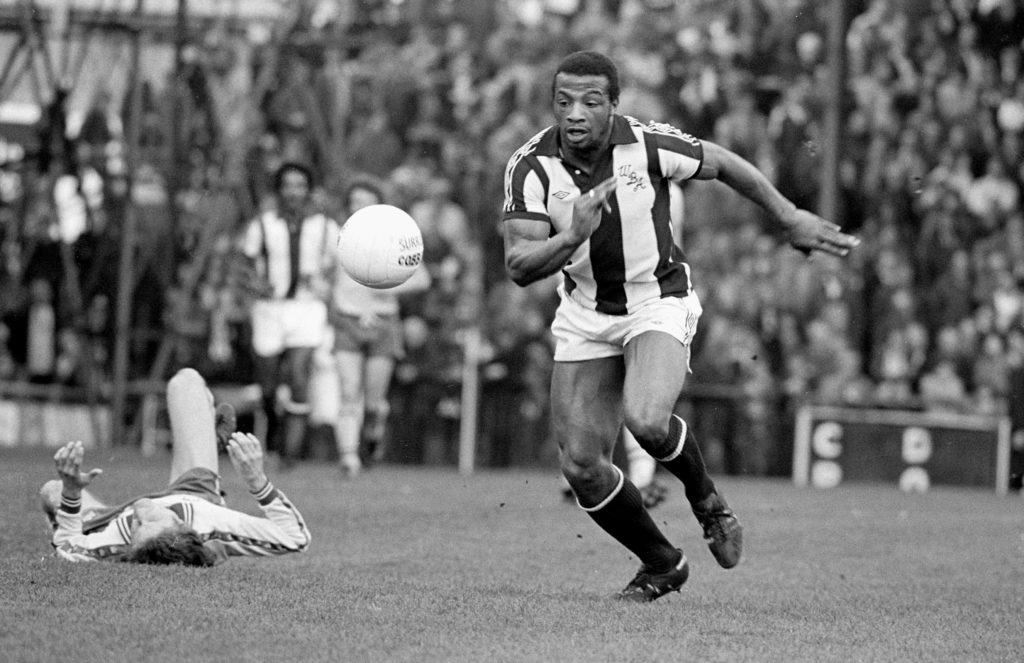
Cyrille Regis
| Position: | Centre-forward |
| Appearances: | 237 |
| Goals: | 82 |
| Managers: | Ronnie Allen (1977–1978), Ron Atkinson (1978–1981) Ronnie Allen (1981–1982) Ron Wylie (1982–1983), Johnny Giles (1984) |
| Years at West Brom: | 1977 – 1984 |
Born on February 9, 1958, in French Guiana, Cyrille Regis made a lasting impact on the English game. He played a crucial role in breaking racial barriers in English football during the late 1970s and early 1980s.
Cyrille Regis rose to prominence while playing for Albion, where he became a club icon. Joining the team in 1977, he quickly gained recognition for his powerful style of play and sheer goal-scoring ability which was a huge part of the West Bromwich Albion squad that achieved success in the top-flight English football.
Regis also earned international caps, representing the England national team – having chosen to represent the Three Lions over his home nation. Aside from Albion, he also played for Coventry City and Aston Villa.
Off the field, Cyrille Regis was a trailblazer for black players in English football, breaking down racial barriers and inspiring a generation. He continued to impact the football community through coaching and mentoring roles later in life.
Cyrille Regis sadly passed away on January 14, 2018, leaving behind a remarkable legacy that continues to inspire and shape the footballing world.
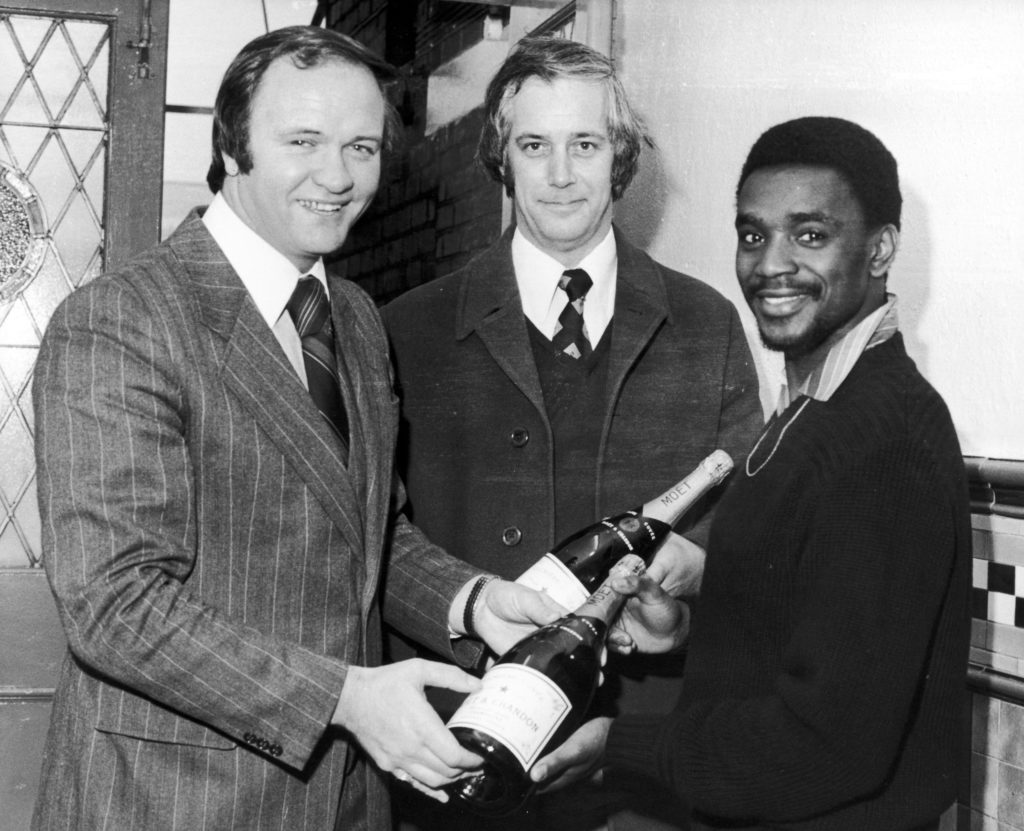
Laurie Cunningham
| Position: | Winger |
| Appearances: | 86 |
| Goals: | 21 |
| Managers: | Ronnie Allen (1977–1978), Ron Atkinson (1978–1979) |
| Years at West Brom: | 1977-1979 |
Born on March 8, 1956, in London, Laurie Cunningham was one of the first black players to make a significant impact in English football. His stylish and skilful play on the wing earned him widespread acclaim throughout the game.
During his short time at West Bromwich Albion from 1977 to 1979, Cunningham was part of the iconic “Three Degrees” alongside Brendon Batson and Cyrille Regis, a trio of black players who broke barriers in English football.
He did help the Albion to success. His major accolades include helping the club reach the FA Cup quarterfinals in the 1977-78 season. He played a crucial role in the UEFA Cup, where The Baggies also reached the last eight.
Cunningham’s performances at The Hawthorns earned him a move to Spanish giants Real Madrid in 1979, becoming one of the first English players to play for the prestigious club. Laurie Cunningham’s impact on English football, particularly during his time at West Brom, is remembered as a pioneering contribution to diversity and excellence on the pitch.
Ronnie Allen
| Position: | Centre-forward |
| Appearances: | 415 |
| Goals: | 208 |
| Managers: | Fred Everiss (1948–1953), Jesse Carver (1953–1956), Vic Buckingham (1956–1958), Norman Low (1958–1961) |
| Years at West Brom: | 1950-1961 |
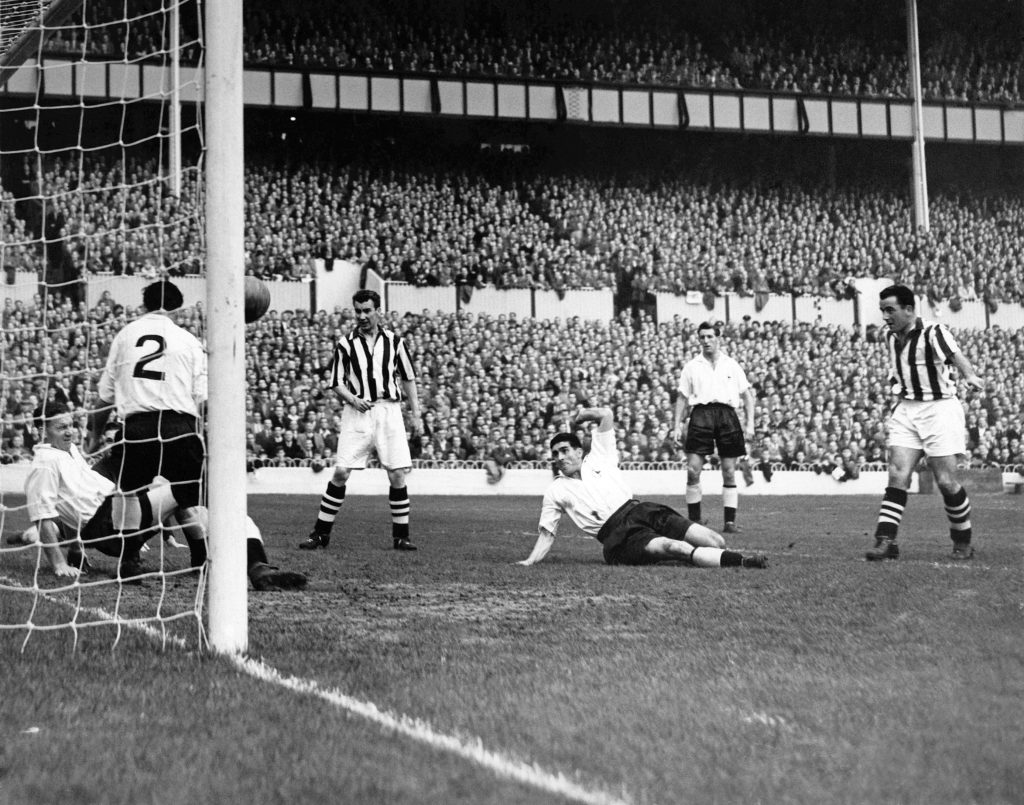
Ronnie Allen became a legendary figure at the Hawthorns, not just as a player – but at the helm of the club.
He initially joined The Baggies in 1950, making significant contributions as an inside forward. He was a seriously keen goalscorer and in the 1953-54 season, his goals made a significant contribution as the club secured the league title.
His outstanding performances earned him a call-up to the England national team, where he showcased his skills on the international stage.
Among his honours, Allen was named the Football Writers’ Association Footballer of the Year in 1954, recognizing his exceptional contributions to the sport.
In 1957, Allen made a move to play for London club Arsenal but returned to West Bromwich Albion in 1961, continuing to make an impact.
Following his playing career, Allen transitioned into management, guiding the team to success. His managerial achievements included leading West Brom to victory in the FA Cup in 1968.
Jeff Astle
| Position: | Centre-forward |
| Appearances: | 292 |
| Goals: | 137 |
| Managers: | Jimmy Hagan (1964–1967), Alan Ashman (1967–1971), Don Howe (1971–1975) |
| Years at West Brom: | 1964 – 1974 |
Jeff Astle was an English footballer who gained fame for his time with West Bromwich Albion. Born on May 13, 1942, in Eastwood, Nottinghamshire, Astle played as a centre-forward and was known for his goal-scoring prowess. After joining the Albion in 1964 – he quickly became a club legend.
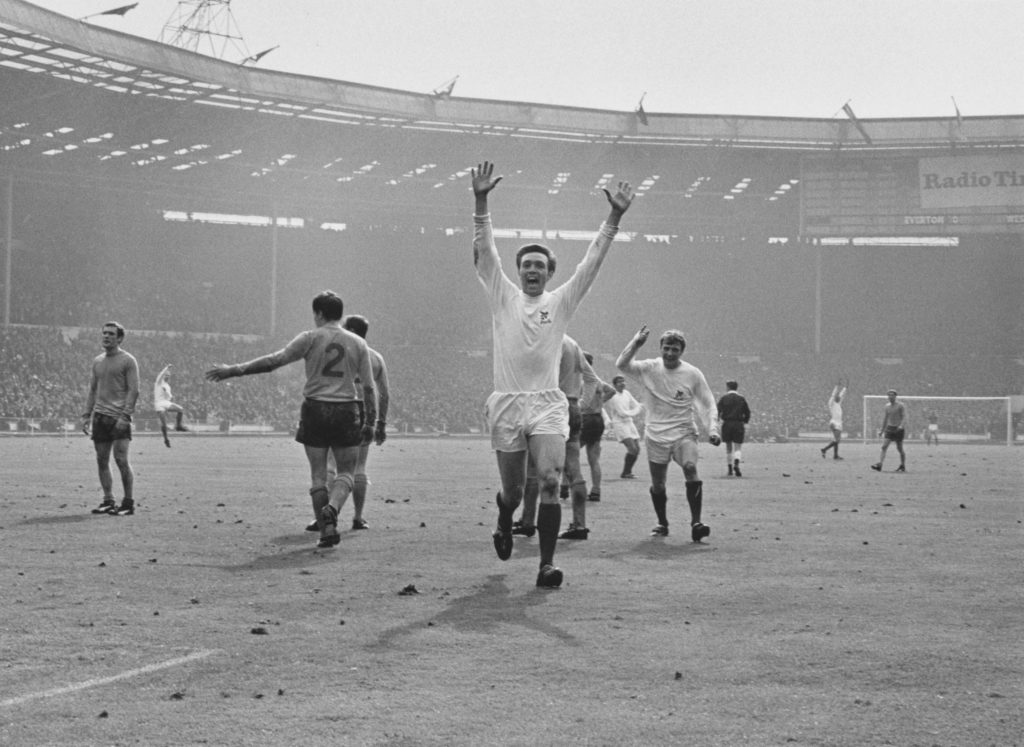
Astle’s major accolade with West Brom has to be winning the FA Cup in the 1967-68 season, a triumph that is still remembered as one of the club’s greatest achievements. Astle played a crucial role in the final, scoring the decisive goal in extra time against Everton.
Known as “The King” to West Bromwich Albion fans, Astle’s best moments at the club were marked by his goal-scoring exploits. He was a prolific striker, scoring 174 goals in 361 appearances for the Baggies. His ability to find the back of the net made him ever so popular with the Baggies faithful, and he remains an iconic figure in the club’s history.
Despite achieving success with West Bromwich Albion, Jeff Astle’s career was tragically cut short. He retired from professional football in 1974 and passed away on January 19, 2002. His legacy lives on, and the Jeff Astle Foundation was established to raise awareness of brain injury in football and honour his memory.
Tony ‘Bomber’ Brown
| Position: | Centre-forward |
| Appearances: | 720 |
| Goals: | 279 |
| Managers: | Vic Buckingham (1961–1964), Jimmy Hagan (1964–1967), Alan Ashman (1967–1971), Don Howe (1971–1975), Johnny Giles (1975–1977), Ron Atkinson (1978–1981) |
| Years at West Brom: | 1963 – 1980 |
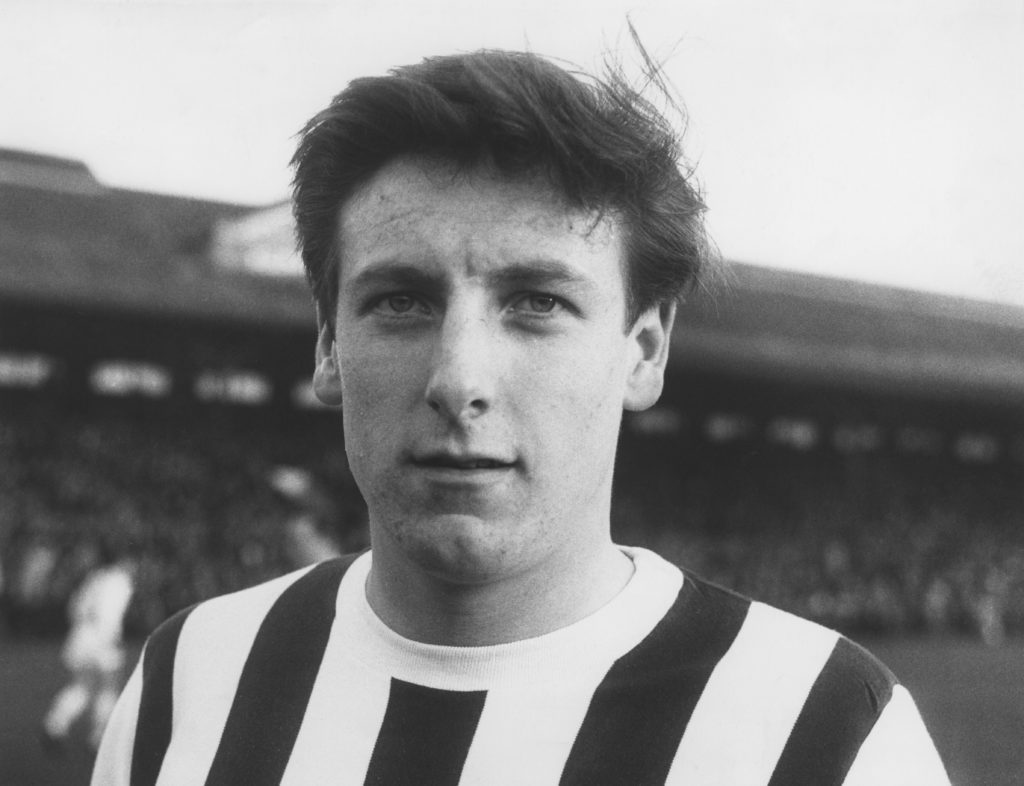
Born on October 3, 1945, in Oldham, England, Tony Brown spent the entirety of his professional playing career at West Brom, spanning from 1963 to 1980. A true Baggies icon.
Known as “Bomber,” Brown holds the record for the most appearances and goals in the history of West Bromwich Albion. Over 18 years, he played an impressive 720 games and scored an astonishing 279 goals for the club.
One of Tony Brown’s major accolades includes helping West Bromwich Albion secure the FA Cup in the 1967-68 season, a historic triumph for the club. He also played a part in the team that reached the UEFA Cup final in the 1970-71 season.
His dedication and loyalty to West Bromwich Albion have left an indelible mark on the club’s history, making Tony Brown an enduring symbol of excellence and commitment.
After retiring as a player, Brown continued to be associated with the club in various capacities, further cementing his legacy at West Bromwich Albion. He may be the club’s best-ever player.
Bryan Robson
| Position: | Midfielder |
| Appearances: | 198 |
| Goals: | 40 |
| Managers: | Johnny Giles (1972-1977), Ron Atkinson (1978-1981) |
| Years at West Brom: | 1972-1981 |
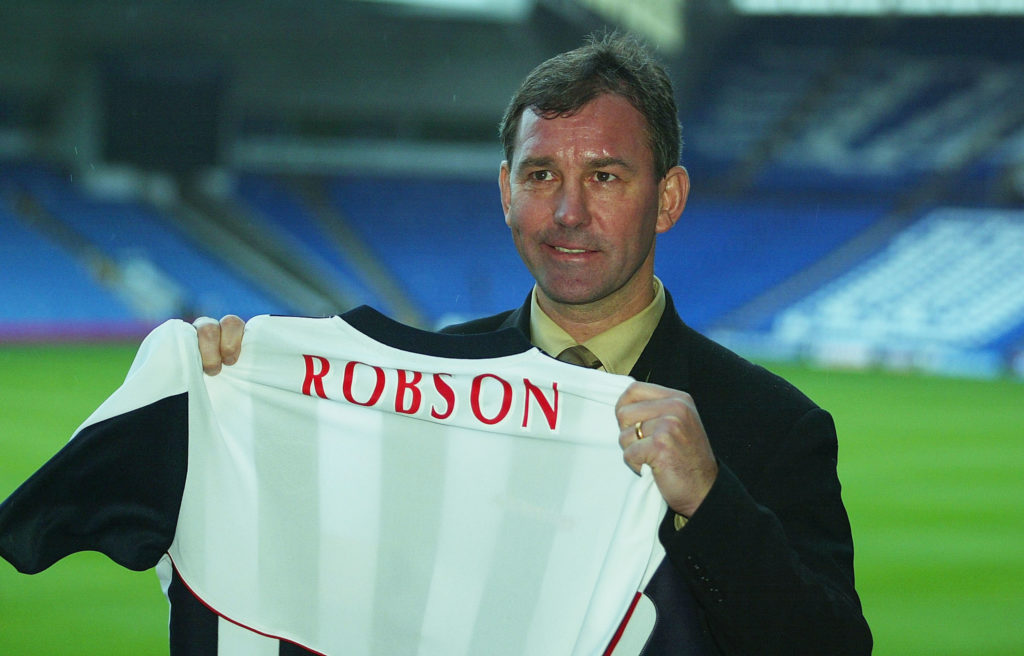
Bryan Robson, often referred to as “Captain Marvel,” began his career at the Albion.
He came through the academy ranks at The Hawthorns, with Robson arguably being the greatest ever talent the Baggies youth setup has ever produced.
One of Bryan Robson’s best moments at West Bromwich Albion includes leading the team to the FA Cup final in 1978, although they were eventually defeated by Ipswich Town.
His exceptional performances for The Baggies then earned him a move to Manchester United in 1981, where he made his mark in football.
Robbo won two FA Cups with Manchester United and was a key figure in the team’s success during the 1980s. He also had a successful international career, earning 90 caps for the England national team.
He will go down as one of the finest midfielders England has ever seen.
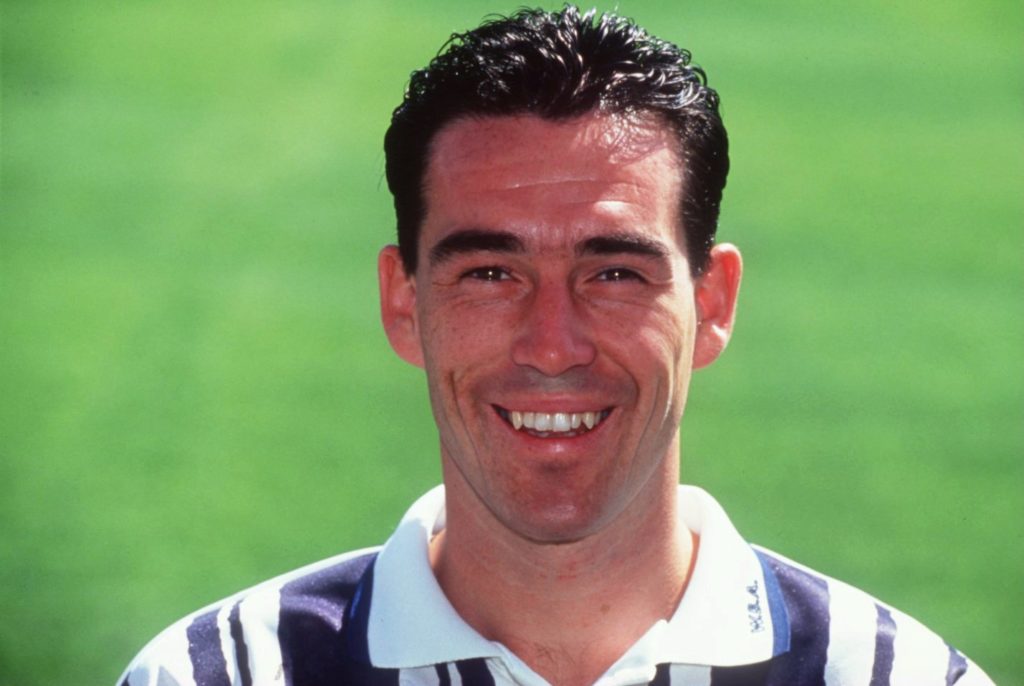
Bob Taylor
| Position: | Centre-forward |
| Appearances: | 238 |
| Goals: | 96 |
| Managers: | Bobby Gould (1992-1993), Keith Burkinshaw (1993-1994), Alan Buckley (1994-1997), Ray Harford (1997-2001) |
| Years at West Brom: | 1992-1995, 1997-2001 |
Bob Taylor enjoyed two separate spells with the club, making a significant impact with fans of the Albion which have cemented legendary status for the forward.
During his first stint with West Brom from 1992 to 1995, Taylor became a fan favourite, earning a reputation as a prolific goal-scorer. He played a crucial role in the team’s promotion to the Premier League in the 1992-1993 season. His impressive performances led to his inclusion in the PFA Team of the Year for the 1992-1993 and 1993-1994 seasons.
Taylor returned to West Bromwich Albion for a second spell from 1997 to 2001, further solidifying his status as a club legend. One of his standout moments came in the 1999-2000 season when he helped West Brom secure promotion to the Premier League, scoring crucial goals throughout the campaign.
Although individual accolades were not as abundant, Bob Taylor’s legacy at the Albion is characterized by his dedication, scoring prowess, and instrumental role in the team’s successes during the 1990s and early 2000s. He’s an undisputed West Brom legend.
Chris Brunt

| Position: | Winger/Midfielder |
| Appearances: | 382 |
| Goals: | 44 |
| Managers: | Tony Mowbray (2006-2009), Roberto Di Matteo (2009-2011), |
| Years at West Brom: | 2007-2020 |
Chris Brunt left an indelible mark during his time at West Bromwich Albion. Born on December 14, 1984, in Belfast, Brunt’s career with the Baggies spanned over a decade, from 2007 to 2019.
Primarily a versatile midfielder, Brunt’s leadership qualities and technical prowess earned him a revered status among West Brom fans. His left foot was a potent weapon, delivering precision crosses and deadly set-pieces. Brunt played a pivotal role in West Brom’s promotion to the Premier League in the 2009-2010 season, showcasing his commitment and skill.
Over the years, Brunt garnered several accolades, including being named West Bromwich Albion’s Player of the Season for the 2009-2010 campaign. His consistency and dedication were recognized with the captain’s armband, symbolizing his influence both on and off the pitch..
Brunt’s overall impact at The Hawthorns extends beyond the numbers. His loyalty, professionalism, and memorable contributions make Chris Brunt a revered figure that will be cherished till the end of time in Baggies folklore.